

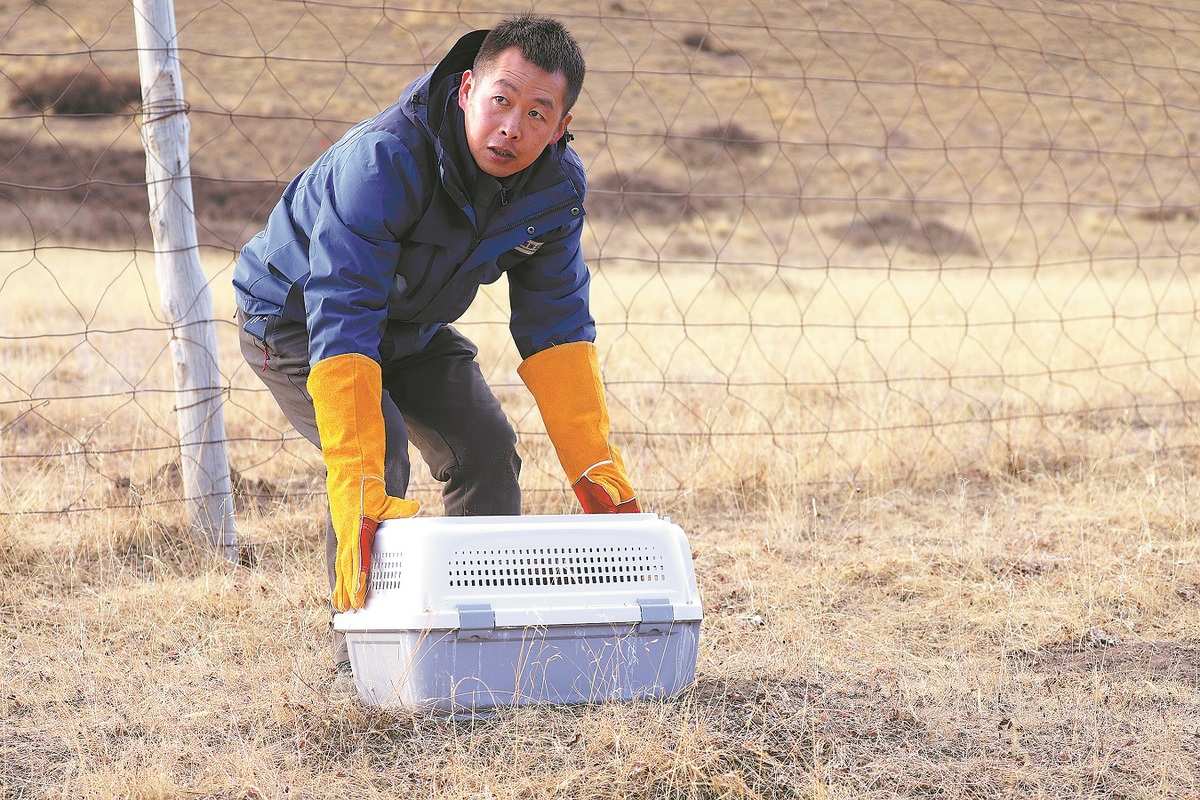
Ma Cunxin prepares to release a Chinese desert cat into the wild in the Qilian Mountain National Park in Qinghai province. [Photo provided to China Daily]
Every morning at 8 am, wildlife rescuer Ma Cunxin begins his busy day: preparing meals for an assortment of animals takes up the entire morning as they all have unique diets and needs. And in the afternoon, he cleans their enclosures and tends to their wounds.
Despite the heavy workload and limited conditions, Ma finds tranquillity in the routine. "For me, feeding animals and cleaning enclosures are the most peaceful moments. I enjoy this solitude."
The 35-year-old is the head of a wildlife rehabilitation and breeding station located deep in the heart of Qilian Mountains in Northwest China's Qinghai province.
The wildlife rehabilitation and breeding station nestled within the Qilian Mountain National Park, which became fully operational in August 2022, is China's only wildlife rescue facility located inside a national park where animals receive medical treatment, personalized rehabilitation and when possible, a second chance at life in the wild.
The station is fully equipped with an operating room, a treatment area and a laboratory. The rescued animals enjoy the areas with the best lighting and the quietest environment in the station, especially those that are highly protected or in unstable condition, Ma said.
In total, the rescue station has taken in over 200 wild animals from 36 species, including the Chinese desert cat, black-necked crane, different species of vultures, snow leopard, and blue sheep — all under State protection.
Ma, along with dozens of rescuers at the station, protect those injured or abandoned by their mothers with expertise and patience.
Of all the animals he has helped rescue, Ma is particularly impressed by the case of a Chinese desert cat.
It is a rare and elusive feline species endemic to the Qinghai-Tibet Plateau and parts of western China. With sand-colored fur, faint dark stripes on the face and legs and black-tipped ears, it is approximately 1.5 to 2 times the size of a domestic cat.
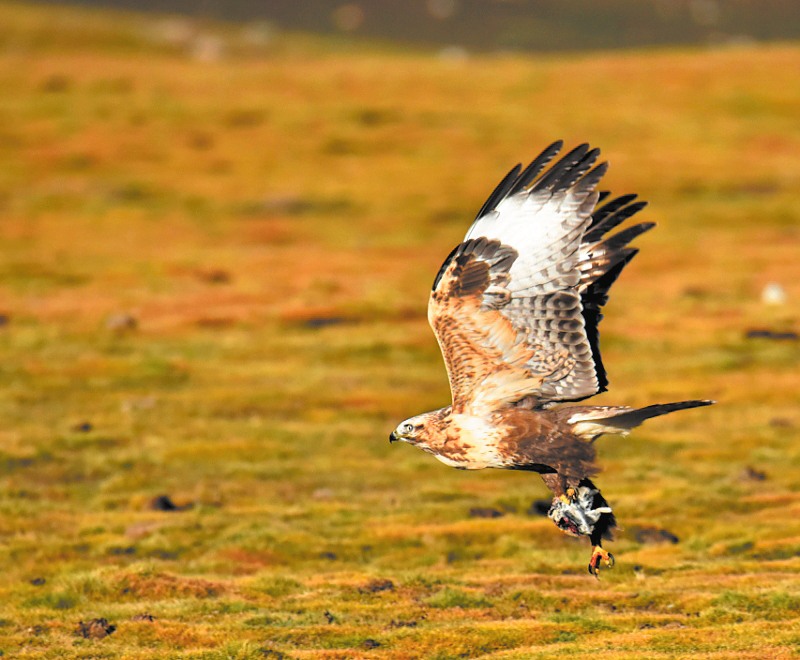
An upland buzzard is seen within the national park. MA CUNXIN/FOR CHINA DAILY
In December 2023, the cat entered a farmer's chicken coop and killed dozens of chickens, and was nearly beaten to death. On realizing that it was the protected Chinese desert cat, the farmer soon called the police and the injured creature was sent to the station.
"The cat had suffered internal injuries, so our treatment focused on reducing inflammation and providing nutrition," Ma said.
To aid its recovery, the team built an enclosed, quiet space to minimize disturbances.
The cat showed a strong desire to survive, Ma said, adding that "it refused to eat the beef or mutton we fed and only ate live prey with fur. It ate almost all the rabbits and chickens we had!"
Two months later, the cat fully recovered and was successfully released back into the wild. Follow-up monitoring showed that it remained active near human-inhabited areas, no longer breaking into farms, which was a sign that it had fully adapted to its natural environment, Ma said.
"That was a fine example of successful rewilding," he said.
When it comes to the degree of human intervention in rescued animals, Ma explained that wildlife rescue must follow a phased approach.
"In the early stage, our top priority is to keep them alive, which requires professional treatment and meticulous care," he said.
"Taking care of them is just like raising a child, and sometimes we have to feed them milk at night. Only after a period of precious care can they survive. They rely on human help 24 hours a day."
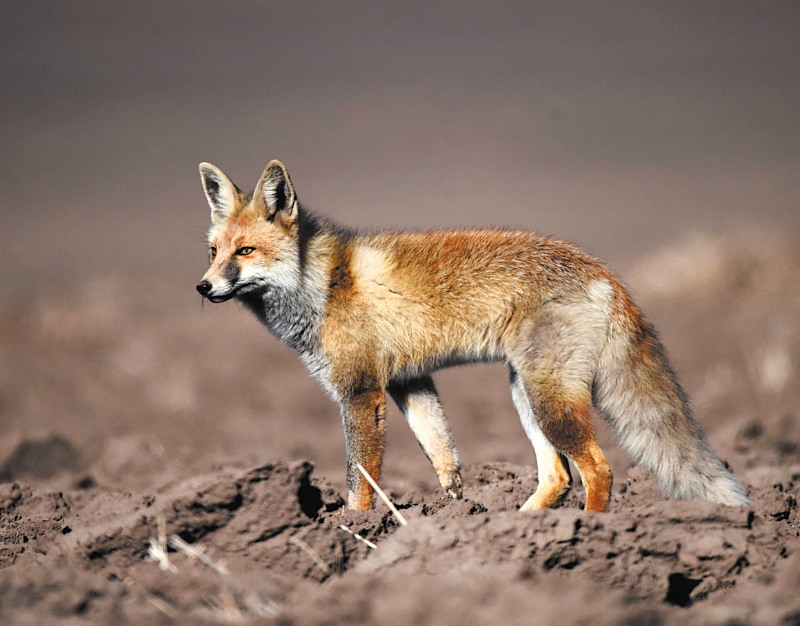
A red fox is seen within the national park. MA CUNXIN/FOR CHINA DAILY
According to Ma, 70 percent of injured raptors can be saved, while young ungulates have a nearly 100 percent survival rate. But deer, especially adults, are very difficult to treat.
These animals are extremely timid and highly alert, which means they have intense stress responses and don't cooperate well during rescue, he said.
As part of the recovery, Ma said, they strictly adhere to the principle of feeding without taming, and make tailored release plans.
For adult animals, the sooner they are released the better; this helps reduce their dependence on food provided by humans and their interaction with humans, Ma said.
However, it's much more difficult to release juvenile raptors and herbivores. Young herbivores tend to become attached to humans, Ma said, adding that raptor chicks require a rehabilitation period of at least three months before they are ready to be released.
"Although not all the rescued animals can be released, returning them to the wild is always our ultimate goal."
To Ma, release is the most rewarding moment. "Captive animals have dull eyes, as if they're just living mechanically. Once they're in nature, their gaze comes alive, you can see the light in their eyes. The wild is where they truly belong."
So far, 43 animals across 17 species have been successfully released back into the wild from the station, and over 50 animals are still under care.
Though the station has made significant progress, it faces practical challenges, including limited cages, insufficient training facilities for large birds, and a special management area for the snow leopard. What's needed most, Ma said, is technical support and professional talent.
Before joining the station, Ma was an observer and researcher of wild animals. With an academic background in zoology, he spent nearly a decade trekking through mountains to document distribution, migration patterns and reproductive behaviors of wild animals.
In July 2023, Ma joined the station and became a front-line wildlife rescuer. For every animal brought to the station, he must accurately identify the species and understand its behavior in order to develop a tailored rescue-and-release plan.
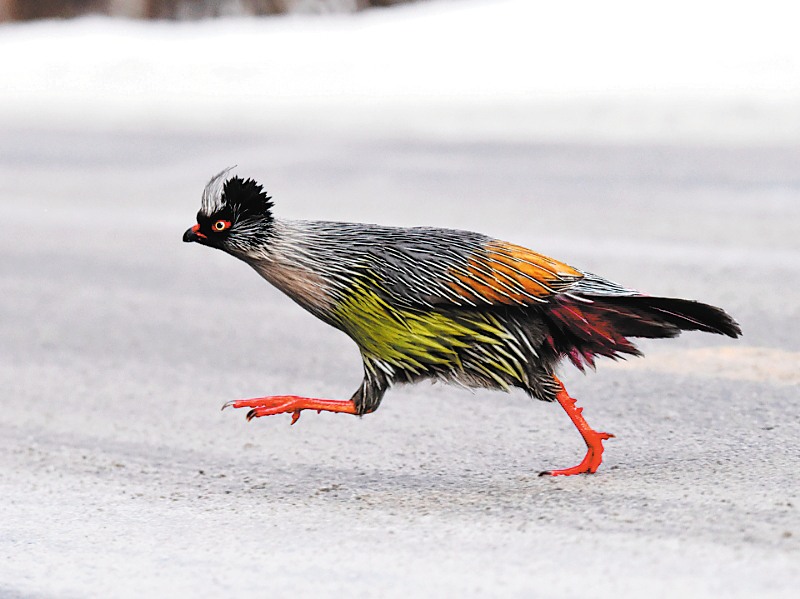
A male blood pheasant is seen within the national park. MA CUNXIN/FOR CHINA DAILY
In the beginning, Ma would question the meaning of wildlife rescue. He believed that rescuing one or two individuals had a limited impact on overall wild populations.
However, his perspective changed as he engaged in hands-on rescue work. "Every rescue, no matter the species, helps us gain experience. And it's that experience that prepares us to better save rare and endangered animals in the future."
And by reintroducing rehabilitated animals into their natural habitats, it will help restore vulnerable wild populations, he said.
"Especially for rare and endangered species, if we successfully release even one individual into the wild, that one animal can become a breeding source, a potential parent that would produce offspring," he added.
More importantly, Ma believes rescue work is the most vivid form of conservation education. The station opens to visitors on Mondays, Wednesdays and Fridays, allowing people to closely observe these animals and learn their stories.
"Photos and videos leave vague impressions. But when people see an injured animal up close, their empathy will enhance their awareness of wildlife conservation," Ma explained.
"I've heard kids tell their parents, 'Wild animals live a hard life.' That might just be the beginning of protection," Ma said.
 Editor:Qiu Xiaochen

