


Bart Dessein (left) at the reception of Mission of China to the European Union on Nov 19, 2010. CHINA DAILY
In the 1980s, in the early years of China's reform and opening-up, Bart Dessein, then a young student in Belgium, got to know the term and became deeply interested in what was still in the West a mysterious oriental land.
It was an era when China was gradually opening its doors to the world, and in Belgium, a handful of curious students were discovering China not through internet videos or immersive exchange programs, but through heavy textbooks, fragments of literature, and scarce opportunities to hear the language spoken aloud.
Early interest
Dessein recalled with a smile what it was like to embark on Chinese studies at that time. "In the early 1980s, learning Chinese was very much the study of a book language. There were very few occasions or possibilities to speak or hear Chinese. There was no internet back then. Also, our knowledge about the Chinese language was not what it is now. If I look back at the study materials that were available then, great progress has been made. Linguistic research since then has changed the situation a lot."
Those early years demanded patience. Dictionaries were often incomplete, and grammar explanations lacked clarity. Yet for Dessein, every character he traced, every text he deciphered, was a window into a civilization he yearned to understand more deeply.
One of the pivotal choices of his academic life came when deciding where to study in China. Many international students gravitated toward Beijing or Shanghai as two metropolises, but Dessein deliberately chose Liaoning University in Shenyang.
In a conversation with Professor Roger Darrobers, Professor Fang Xudong of East China Normal University recalled the story: "I asked Professor Dessein why he chose to go to Liaoning University instead of Beijing or Shanghai. He replied that since fewer people there spoke foreign languages, he would be forced to speak only Chinese. That was his way of pushing himself to truly learn."
This immersion worked wonders. Dessein formed lasting friendships with Chinese classmates and professors. "I still have a very good contact with my mother school in China," he said, using an affectionate term for an alma mater.
"This also shows the high appreciation Chinese universities have for their former students. After all these years, you still feel as one of them. My department has very good contacts with many universities in China. Experiences of Chinese PhD students also are important for new incoming students of the same universities."
"Also here, family ties are made," he added.
After returning from China, Dessein continued his academic career and obtained a PhD in 1994. His dissertation marked the beginning of a lifelong scholarly journey into Chinese philosophy. Initially, he focused on Buddhist philosophy, but his curiosity soon drew him into the interwoven traditions of Confucianism, Neo-Confucianism, and the broader field of cross-cultural studies.
Today, Dessein is a professor in the Department of Languages and Cultures at Ghent University, where he leads the research group "East Asian Culture in Perspective: Identity, Historical Consciousness, Modernity".
His influence extends well beyond Belgium. From 2016 to 2022, he served as president of the European Association for Chinese Studies, fostering dialogue and collaboration among Sinologists across the continent.
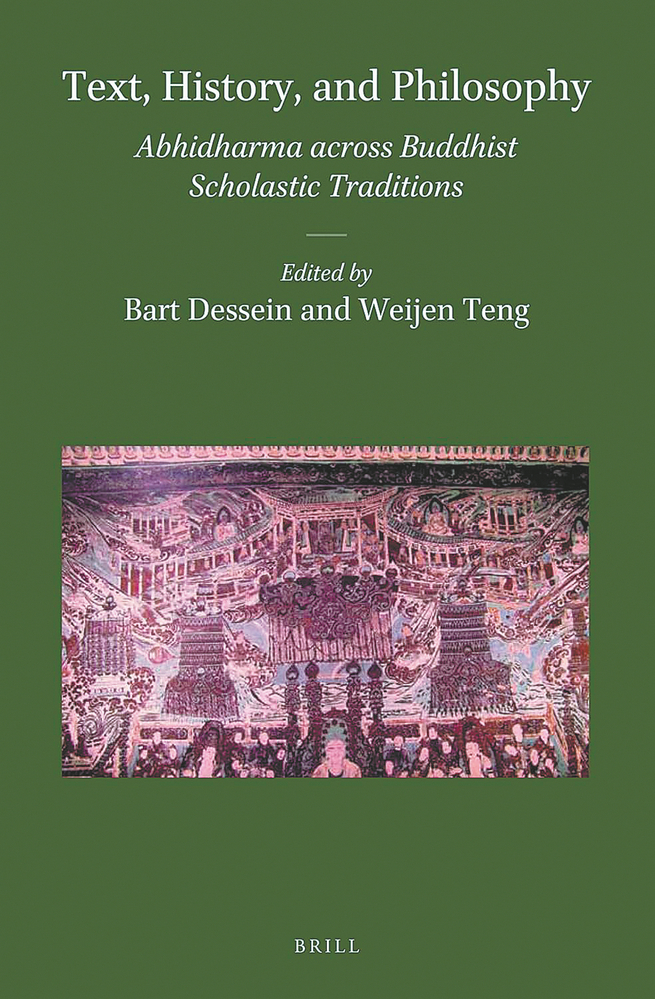
Publications of Dessein that are related to Chinese and Asian studies. CHINA DAILY
Deep research
The studies done within the research group of Dessein and his students as the whole team span a remarkable range, from ancient Buddhist texts to the way modern Chinese society interprets its philosophical traditions.
Studies conducted within the group include an examination of Zheng Banqiao's (1693-1765) famous calligraphy nande hutu (It's difficult to be muddled), which remains immensely popular in China today. The study explored how the phrase has inspired not only academic reflection but also a broader cultural movement sometimes called hutuxue (the art of being, or pretending to be, muddled).
The analysis demonstrated how a centuries-old concept continues to resonate in a society navigating the pressures of individualism, capitalism, and globalization.
Another study conducted in the research group delved into the Zutang Ji (Collection of the Patriarchal Hall), the earliest surviving genealogical record of Chan Buddhism. Through philological research, textual criticism, and even digital humanities tools and historical social network analysis, the compilation history of the text and its role in shaping medieval Chinese Buddhism were reconstructed.
Another study concerns the formation of regional monastic communities in China during the Tang Dynasty (618-907). By studying extra-canonical sources such as epigraphy, secular literature, and local gazetteers, overlooked actors and networks were identified, challenging conventional narratives about the relationship between the center and periphery in Chinese religious life.
Yet another study concerns the doctrine of wu wo (no-self, or anatman) in Ming Dynasty (1368-1644) Buddhism. While the Indian tradition treated "no-self" as an ontological denial of a permanent self, Chinese interpretations often took an epistemological turn, emphasizing relational non-duality. The research on the Ming monk Zibo Zhenke (1543-1603) highlights the dynamic interplay between Buddhism, Confucianism, and Taoism in late imperial thought.
For Dessein, these projects, diverse as they are, share a common thread: a deep commitment to understanding China's intellectual traditions on their own terms, while also situating them within global philosophical and cultural conversations.
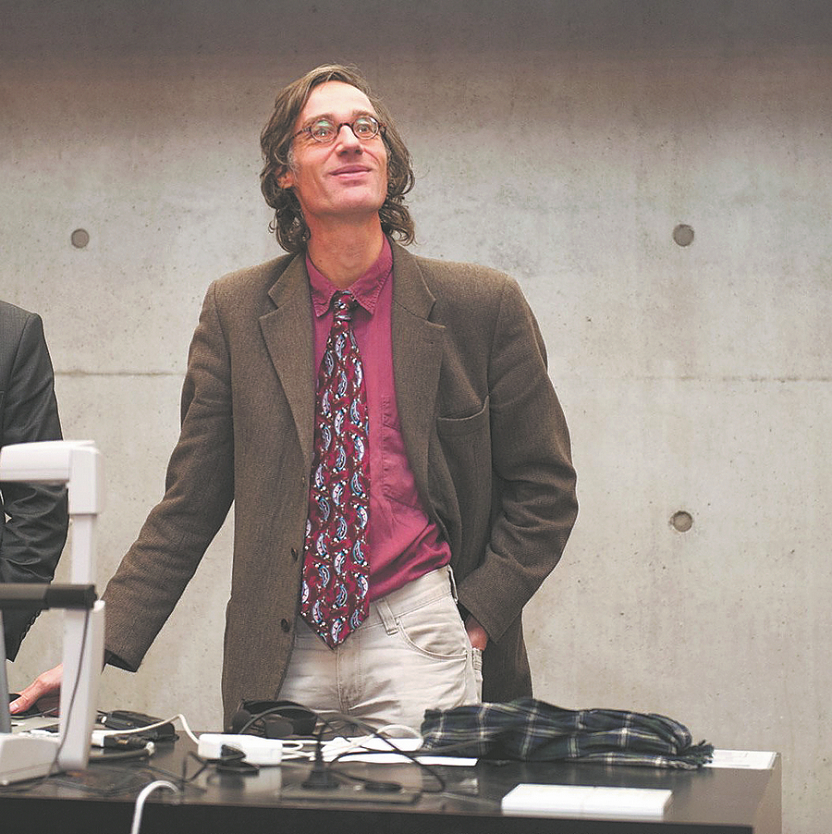
A photograph of Bart Dessein when he was young, posted on the official website of Ghent University in Belgium. CHINA DAILY
Views on relations
Beyond his research, Dessein has long reflected on the broader relationship between China and Europe. He emphasizes that understanding another country requires empathy, and that language, history and culture are indispensable to this process. "The way a country behaves on the international scene is very much influenced by that country's history and self-perception," he says. "It is therefore very necessary that studying language and culture go hand in hand. Having empathy with a country helps to understand a country and vice versa."
He observes that both China and Europe face similar global challenges — food security, environmental concerns, and technological change — that can only be addressed through collaboration. "Reality will sooner or later necessitate more collaboration," he says, warning that the decline of cultural and language studies worldwide risks undermining mutual understanding.
On academic exchanges, Dessein points to clear evidence that mobility fosters trust. "We see that those countries that receive most Chinese students are also those countries that send most students to China. This shows that exchanges are important for mutual understanding and building trust. Mutual understanding and trust are fundamental for political and economic relations to be built on."
As for whether China and Europe are diverging or converging, he offers a balanced perspective: "The world has always been global. This is not a new thing. The speed with which events in one place impact other places is, however, increasingly quick. This makes Europe more Chinese but also makes China more European. Divergence and complementarity are present simultaneously."
Engaging with Chinese civilization, he believes, is ultimately a mirror for Europe. "Cultural contacts help to see that there are different ways of looking at things, and give more nuanced standpoints. The global and the local are two sides of the same coin."
For young Europeans considering Chinese studies, his advice is unequivocal: "China is one of the major powers in the current world. What happens in China has an effect on the world at large. We therefore need more people who can communicate with Chinese people, read Chinese, and can contextualize in a broader historical frame. Studying Chinese language and culture is very important. In general, studying another culture is very conducive to better understanding oneself."
And looking ahead 20 years, he envisions a China-Europe partnership that extends beyond bilateral ties. "The global scene is changing rapidly. A constructive China-Europe partnership needs to extend beyond the bilateral relationship, it should also have an eye on the rest of the world, and the varied domains of the partnership."

Publications of Dessein that are related to Chinese and Asian studies. CHINA DAILY
Rediscovering culture
Dessein's research trajectory — from Buddhist philosophy to Confucianism and New Confucianism — reflects not only his scholarly curiosity but also his attentiveness to China's evolving society.
"If you study Chinese Buddhism, you inevitably encounter Confucianism," he explains. "From the Wei Dynasty (220-265) onwards, Buddhism influenced Confucianism. They are inseparable." His later turn to New Confucianism stemmed from a desire to understand contemporary China. "What struck me was that after a period of harsh criticism, Confucianism regained importance in modern society. I wanted to explore why, and what this says about China today."
He attributes this revival to China's growing international confidence. Once derided as a cause of weakness, Confucianism is now recognized as part of China's cultural strength. "No culture has a future without its history. Confucianism is part of China's roots. As China's global status rises, it realizes that not everything in the West is superior. This is not arrogance, but a rediscovery of cultural advantages."
Confucian ideas, he argues, still have practical value. The philosophy of xiushen (self-cultivation), which emphasizes personal moral responsibility, remains relevant. "If every individual strives to become a 'junzi' (gentleman), the whole nation improves. Confucianism is not against development. On the contrary, its focus on moral self-improvement can contribute to modernization."
On the concept of modernization itself, Dessein stresses that it need not equate to Westernization. "China has its own historical background. Chinese modernization inevitably includes elements of traditional culture. Western culture has strengths, but it is not the standard. Every country should absorb foreign culture according to its own needs, just as Buddhism integrated into Chinese culture and became part of it."
He believes Chinese philosophical traditions also offer insights for global challenges. The concept of tian ren he yi (harmony between heaven and humanity), for example, provides a counterpoint to the Western idea of conquering nature. "This perspective encourages us to rethink the relationship between human development and the natural environment. It can help address issues such as climate change."
That's why he insists that equality must be the foundation for cultural exchanges. "If you start from a Western-centric point of view, you will never understand other cultures. Differences should not be dismissed as negative. We must ask why they exist. Even if we do not agree, trying to understand is essential."
From tracing Buddhist manuscripts to analyzing modern reinterpretations of Confucianism, from building academic networks to advising young Europeans, Dessein has spent four decades weaving intellectual and personal ties between China and Europe.
As China continues to develop and Europe redefines its role in a globalized world, his message remains simple but profound: empathy, equality, and mutual learning are the cornerstones of meaningful exchange. And in that lifelong exchange, Dessein himself has become not only a scholar of China but also, in many ways, part of its extended academic family.
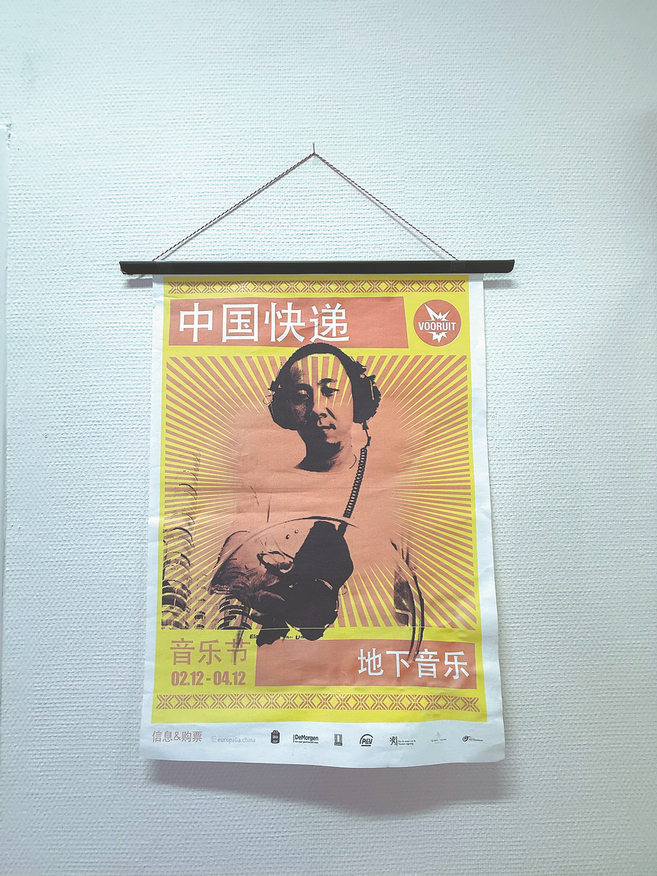
The poster of a Chinese concert that Dessein attended almost 20 years ago, which he kept as a precious item in office. WANG JINGJING/FOR CHINA DAILY

An incense burner in Dessein's office, which was a gift from his Chinese friends. WANG JINGJING/FOR CHINA DAILY
 Editor:Cai Xiaohui

